
Browse the December 2024 UCI Brain Circuit E-newsletter

$5,000 Seed Grants for Behavioral Testing Core Facility – Due Dec. 13
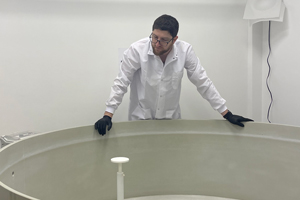
UC Irvine-led study reveals new insights into how we navigate space and store memories

Irvine, Calif., Nov. 14, 2024 — Researchers led by the University of California, Irvine are the first to reveal how two neural circuits located in the brain’s retrosplenial cortex are directly linked to spatial navigation and memory storage. This discovery could lead to more precise medical treatments for Alzheimer’s disease and other cognitive disorders by allowing…
Read MoreExcessive daytime sleepiness can lead to dementia, study indicates

Sleep plays a critical role in cognitive decline and dementia. Don’t take your sleep lightly,” said Karen Lincoln, a professor and director of the Center for Environmental Health Disparities Research at the University of California, Irvine. In 2022, she launched the “BrainWorks 2.0: Sleep Tight” study, using neuroimaging to better understand how sleep quality impacts…
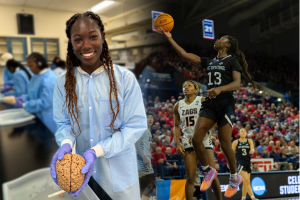
Read MoreHoops and Brains: Déja Lee’s Journey as a Basketball Star and Aspiring Neurosurgeon
Browse the November 2024 UCI Brain Circuit E-newsletter
UCI Health psychiatrist honored for cognitive neuroscience research

Orange, Calif. — UCI Health psychiatrist Dr. Cameron S. Carter has been awarded the 2024 Goldman-Rakic Prize for Outstanding Achievement in Cognitive Neuroscience Research by the Brain & Behavior Research Foundation’s (BBRF) Scientific Council.
Read MoreWhat are mechanisms? Unpacking the term is key to progress in neuroscience

Co-authors: Lauren N. Ross, associate professor of logic and philosophy of science, and Michael Yassa, professor of neurobiology & behavior. In neuroscience, “mechanism” is a common and powerful concept. Mechanisms are often viewed as causal systems, which helps explain their central role in neuroscience. Causes are factors that can control, predict and explain their effects,…
Read MoreUC Irvine researchers are first to reveal role of ophthalmic acid in motor function control

Irvine, Calif., Oct. 4, 2024 — A research team from the University of California, Irvine is the first to reveal that a molecule in the brain – ophthalmic acid – unexpectedly acts like a neurotransmitter similar to dopamine in regulating motor function, offering a new therapeutic target for Parkinson’s and other movement diseases.
Read More